Key points
- Brew tea with hot water, then cool it and get it into the fridge.
- USDA FSIS says food and drink should not sit out of the fridge for more than 2 hours, or 1 hour above 90°F.
- Borosilicate glass handles heat well, but let it settle before a big jump in temperature.
- Neither of our pitcher lids is airtight, so the pitcher always stands upright.
Two pitchers, two ways to pour
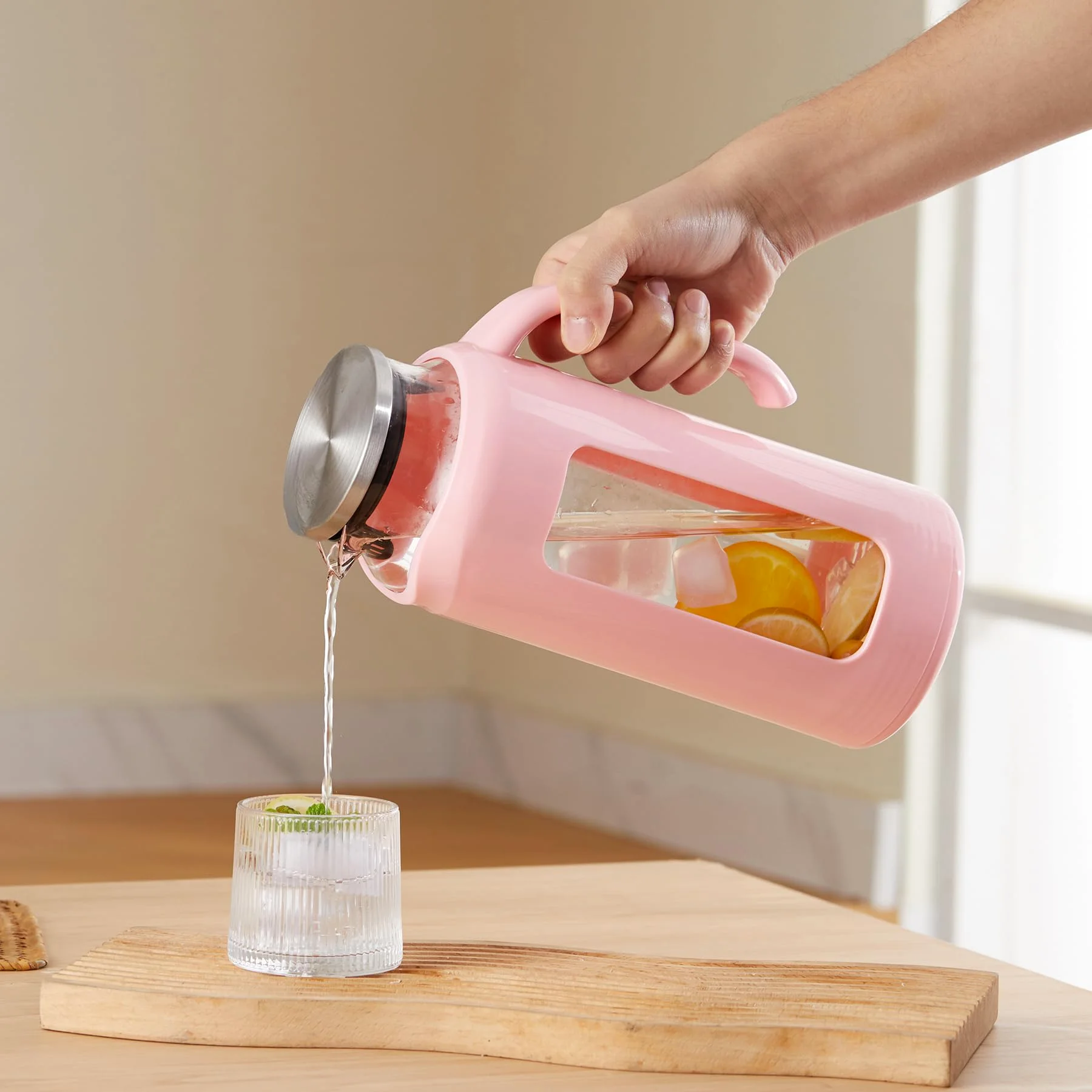
Our range has two glass pitchers, and they suit slightly different habits. Both hold about two liters, both have a borosilicate glass body inside a pink shell, and both go in the dishwasher. The difference is the lid and the shape.
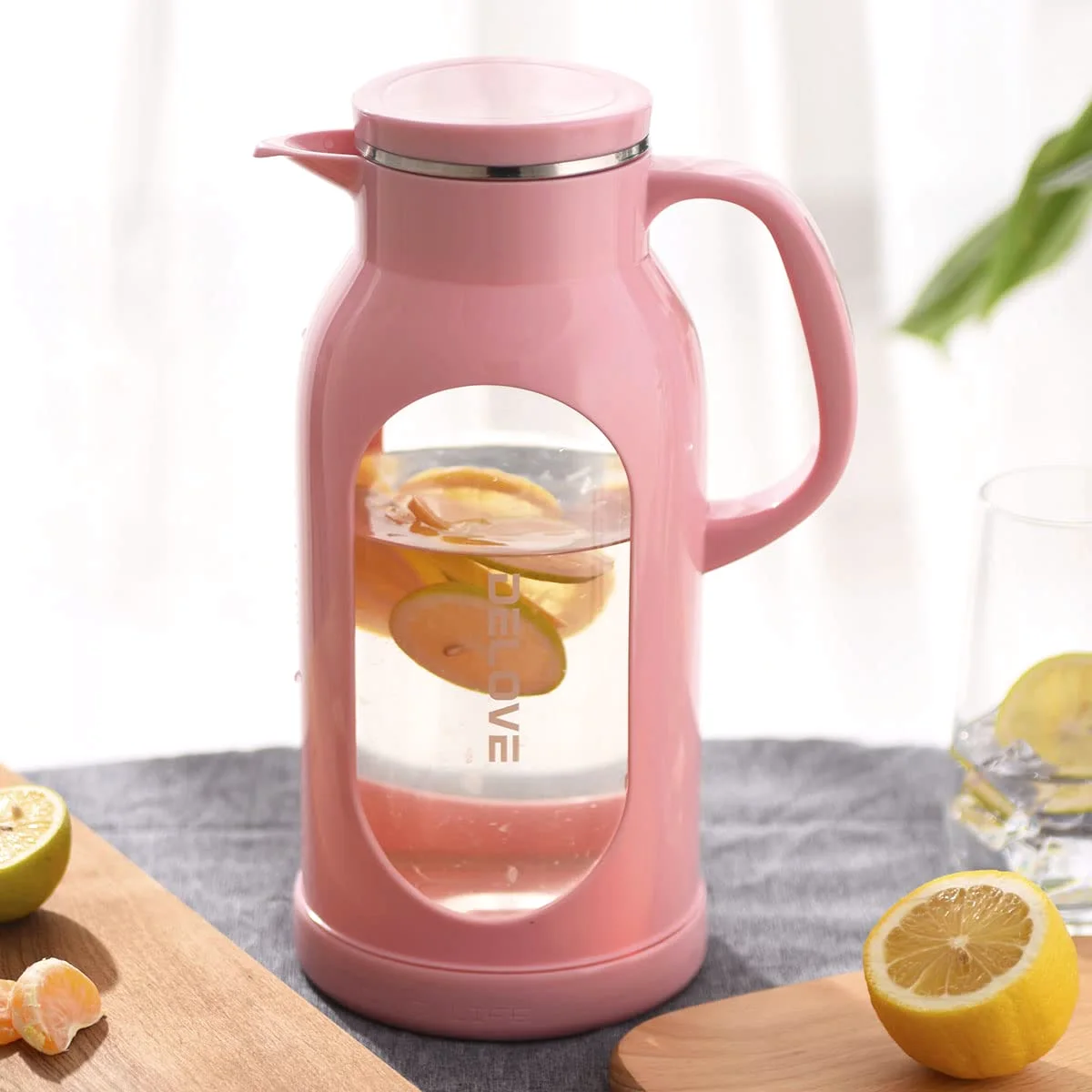
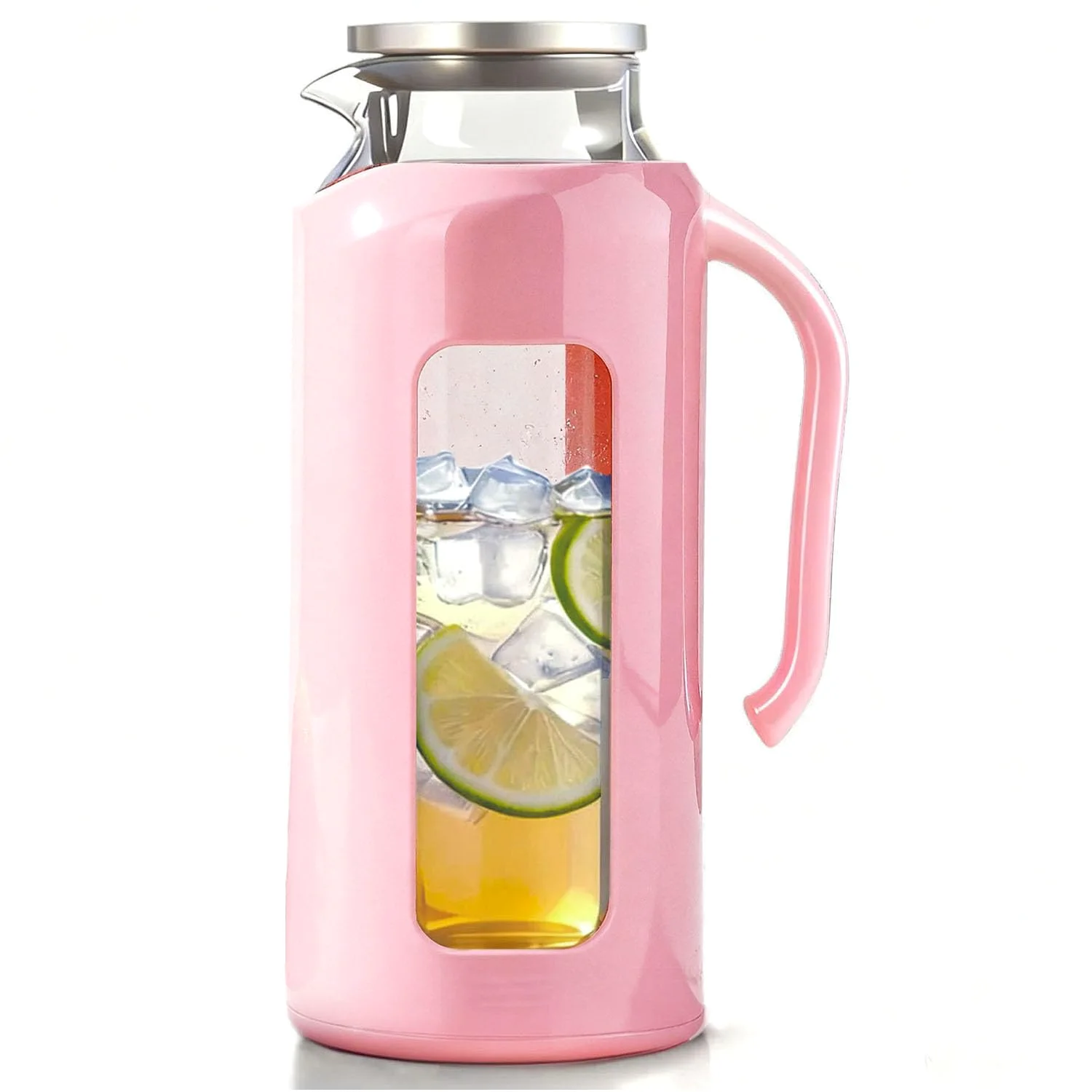
The 68 oz glass pitcher has a stainless steel lid that turns between two pouring options and a long spout shaped to cut the pour off cleanly. It is the one for iced tea and plain water poured glass after glass. The 2 L glass jug has a two-ear lid that doubles as a filter, so lemon slices, berries and loose tea stay in the jug when you pour. It is the one for fruit water and infusions.
| Detail | 68 oz pitcher | 2 L jug |
|---|---|---|
| Capacity | 68 fl oz (2 liters) | 2 liters (about 67.6 fl oz) |
| Glass | Borosilicate, lead-free | High-borosilicate, lead-free |
| Rated temperature | 0 to 300°F | -4 to 302°F |
| Lid | Stainless steel, two pours | Two-ear filter lid |
| Height and width | 11.1 in by 5.2 in | 11.32 in by 4.73 in |
| Airtight | No | No |
Brew hot, then chill
The cleanest way to make iced tea in a glass pitcher is to brew it hot. Put the tea bags in the pitcher, pour in water just off the boil, steep for as long as the box says and lift the bags out. Both of our pitchers are rated well above boiling, 300°F for the 68 oz pitcher and 302°F for the jug, so hot water is what the glass is made for.
Then cool it and get it cold. The USDA Food Safety and Inspection Service calls the range between 40°F and 140°F the danger zone, because that is where bacteria grow fastest, doubling in as little as 20 minutes. A pitcher of tea that cools slowly on a warm counter spends a long time in that range. Let the steam die down for a short while, then move the pitcher to the fridge.
If you like your tea strong and fast, brew a double-strength batch in half the water and top it up with cold water and ice once the bags are out. The pitcher reaches drinking temperature in minutes instead of hours.
- 1
Put the tea bags or loose tea in the pitcher.
- 2
Pour in water just off the boil and steep for the time on the box.
- 3
Lift out the bags, or pour through the jug's filter lid into a second jug if you used loose tea.
- 4
Let it stop steaming, then put it in the fridge, upright.
Let the glass change temperature gently
Borosilicate glass is the kind used in lab glassware and good bakeware because it handles heat much better than ordinary soda-lime glass. That is why both of our pitchers take boiling water. Still, any glass appreciates a gentle change. University of New Hampshire Extension gives the same advice for canning jars: keep the glass warm before hot food goes in, because filling cold glass with hot food can crack it.
In practice, that means a few small habits. Do not take a pitcher straight from the freezer or a cold fridge shelf and fill it with boiling water. Do not set a pitcher of hot tea on a cold, wet stone counter, and do not run cold water over it while it is still steaming. Let it sit a minute or two between extremes, and the glass will be fine for years.
Fruit water with a filter lid
Fruit water is the reason the jug has a two-ear lid. Slice a lemon, a handful of strawberries or a few cucumber rounds, drop them in, fill with cold water and set the lid on. When you pour, the lid holds the slices back and only the water comes out. Mint, basil and thin ginger slices work the same way.
Give it an hour in the fridge for the flavor to come through. Citrus peel turns bitter if it sits too long, so take lemon and lime slices out after a day, or slice fresh fruit for each batch. Berries soften quickly, which is another reason to make a smaller batch more often.
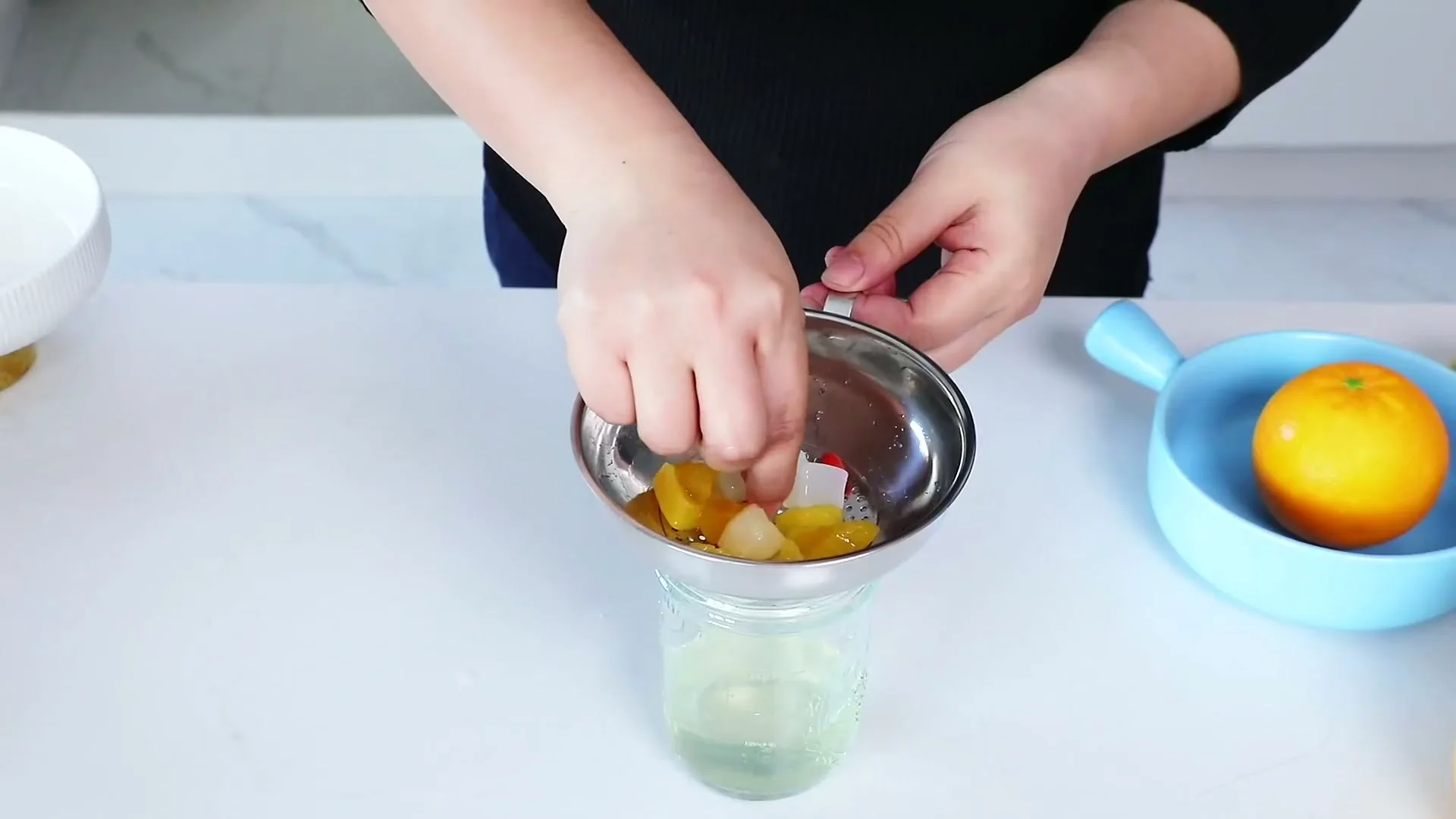
The same lid works as a strainer for loose tea. Brew the leaves in the jug with hot water, let it cool, and pour through the lid. The leaves stay behind, and the jug never needs a separate infuser.
How long can it sit out
On the table at a barbecue, a pitcher warms up faster than you think. FSIS is specific: never leave food out of refrigeration for more than 2 hours, or for more than 1 hour if the temperature is above 90°F. Tea with milk or sugar, juice, lemonade and fruit water fall under the same rule as any other food.
There is an easy way to stay inside it. Bring out one pitcher at a time and keep a second one cold in the fridge. When the first one has been out for an hour or two, swap them, and pour what is left of the warm one into a jar for the fridge if you want to keep it. A bowl of ice under the pitcher helps on a hot day, too.
Neither of our lids is airtight, so the pitcher stands upright in the fridge door or on a shelf. At just over 11 inches tall, measure the height of your shelf or door bin before you count on it fitting.
Keeping the glass clear
Tea leaves a faint brown film on glass over time, and fruit water can leave spots where the water dries. Both pitchers go in the dishwasher, the 68 oz pitcher without taking it apart. The jug's shell also comes off, so you can wash the glass by hand with a bottle brush when you want it spotless.
For stubborn tea stains, a soak in warm water with a spoonful of baking soda loosens the film, and a rinse with diluted vinegar takes care of water spots. Let the pitcher dry upside down on a rack before the lid goes back on.
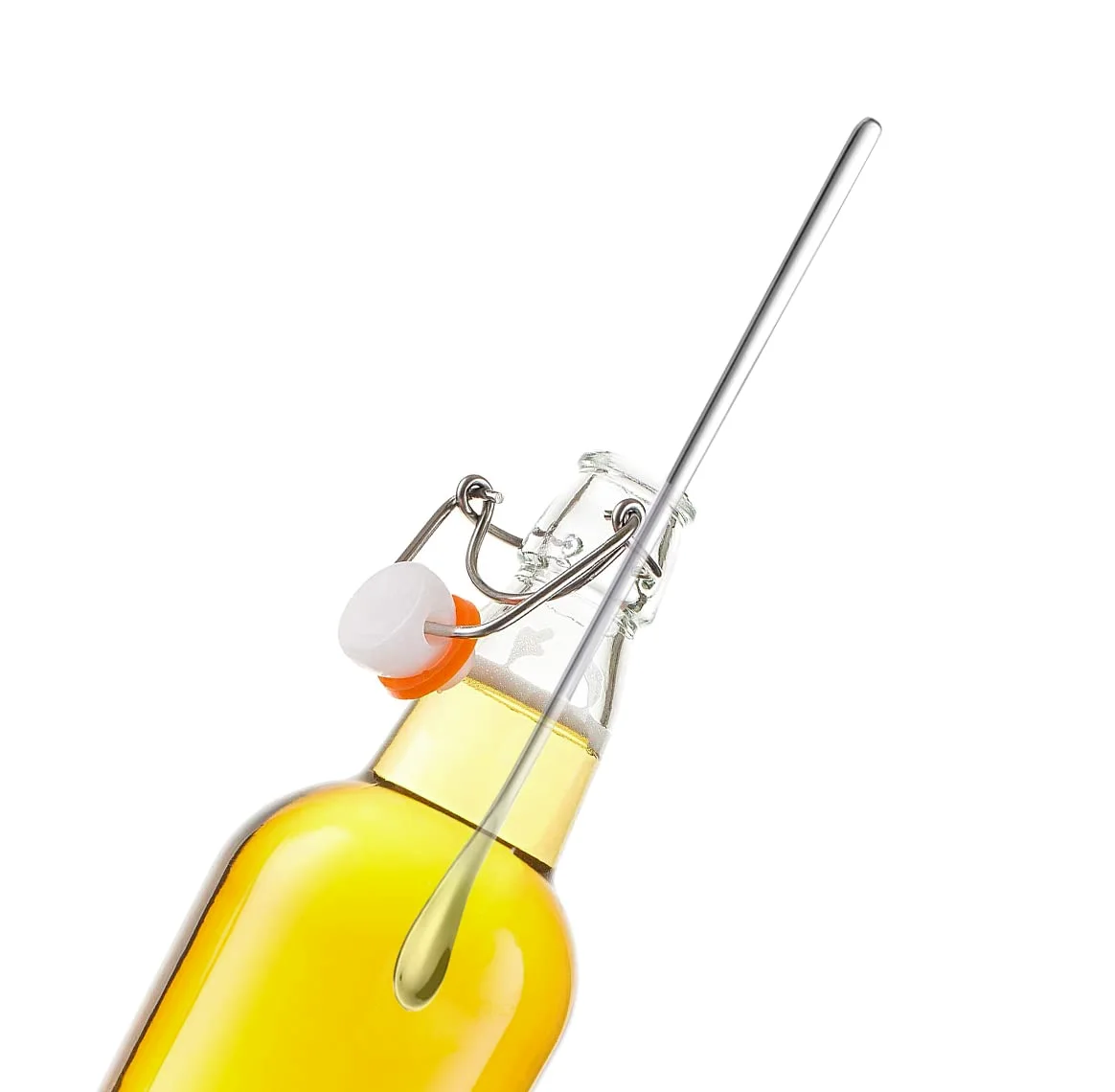
A long spoon makes stirring the bottom of a two-liter pitcher easy, where sugar and syrup settle. Our 10.3-inch stainless stirring spoons are our longest: hold one by the end and it stirs deep into either pitcher. Both pitchers are on Delove glass pitchers, with their current prices.
Every product named here is part of the Delove kitchen line.